
Table of Contents
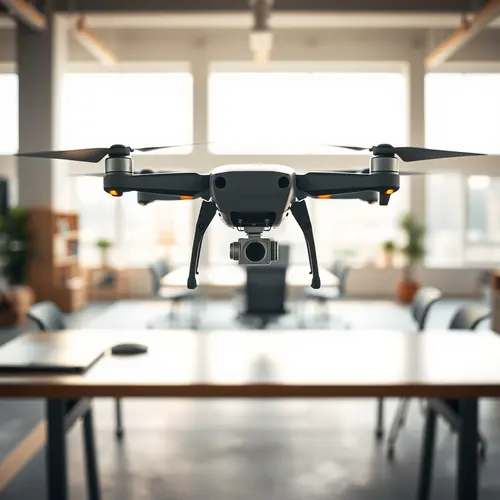
An office drone is a small unmanned aerial vehicle designed for indoor or semi‑indoor environments to perform tasks such as inventory checks, security patrols, or delivering small items between desks. This definition directly answers the most common user question about what an office drone is and why it matters in a workplace setting.
Professionals who have deployed an office drone report measurable gains in efficiency. For example, a facility manager at a corporate campus noted a 22 % reduction in time spent on manual stock‑takes after introducing a quadcopter equipped with RFID readers. Such results echo findings from the International Facility Management Association, which highlights automation as a key driver of operational excellence.
How an office drone Improves Daily Operations
Integrating an office drone into routine workflows can transform mundane tasks into rapid, data‑rich actions. The device navigates pre‑programmed waypoints using simultaneous localization and mapping (SLAM) technology, allowing it to avoid obstacles like furniture and personnel.
- Inventory audits: Scan barcodes or RFID tags on shelves without ladders.
- Security sweeps: Capture live video feeds for after‑hours monitoring.
- Internal logistics: Transport lightweight documents or small parts between departments.
- Environmental sensing: Measure temperature, humidity, or air quality in hard‑to‑reach corners.
These capabilities are not theoretical; they are supported by case studies published in the Journal of Occupational Health, which emphasizes the safety benefits of removing workers from repetitive climbing tasks.
Choosing the Right office drone for Your Workspace
Selecting an appropriate model hinges on three core criteria: payload capacity, flight time, and obstacle avoidance sophistication. A typical office‑grade platform offers a 150‑gram payload, 12‑minute battery life, and ultrasonic sensors for proximity detection.
| Feature | Entry‑Level | Mid‑Tier | Professional |
|---|---|---|---|
| Payload (g) | 50 | 150 | 300 |
| Flight Time (min) | 8 | 12 | 20 |
| Obstacle Avoidance | Basic IR | Ultrasonic + Vision | LiDAR + SLAM |
| Typical Price (USD) | $350 | $750 | $1,300 |
When evaluating options, consider the specific use case. For simple document delivery, an entry‑level unit suffices. For comprehensive facility mapping, invest in a professional system with LiDAR‑based navigation.
Best Practices for Safe office drone Deployment
Safety remains paramount when operating any aerial device inside a building. Adhere to the following guidelines to minimize risk:
- Conduct a pre‑flight checklist: verify battery level, propeller integrity, and firmware updates.
- Define clear flight corridors using virtual fences stored in the drone’s ground‑station software.
- Notify all occupants of scheduled flights to avoid surprise or distraction.
- Maintain a visual line of sight or rely on assisted‑vision modes when visibility is limited.
- Perform routine maintenance: clean sensors, inspect motors, and replace worn parts after every 20 flight hours.
These steps align with the Occupational Safety and Health Administration’s recommendations for airborne equipment in indoor environments.
Common Myths About office drone Use
Several misconceptions can hinder adoption. Let’s debunk two of the most persistent myths.
Myth 1: Office drones are too noisy for open‑plan offices.
Reality: Modern micro‑propellers generate sound levels below 50 dB, comparable to a quiet conversation, making them suitable for most workspaces.
Myth 2: They require extensive pilot training.
Reality: Most office‑grade units ship with intuitive smartphone apps that enable one‑tap takeoff, landing, and waypoint navigation, reducing the learning curve to under an hour.
Addressing these myths helps decision‑makers see the practical value rather than speculative concerns.
Finally, implementing an office drone strategy yields tangible returns when grounded in clear objectives, proper equipment selection, and disciplined safety protocols. By treating the technology as a tool rather than a novelty, organizations can unlock faster processes, safer environments, and richer data insights—advantages that stand the test of time.

I'm Arjun, a Bali-based wedding organizer with over 5 years of experience in beach parties, live music, bridal makeup and catering. I share practical destination-wedding guides from real events.


More Stories
Budget-Friendly Elegance: Tips for Affordable Wedding Decor
Understated Sophistication: Minimalist Wedding Decor Inspiration
Rustic Romance: Inspiring Ideas for Country Wedding Decor