
Table of Contents
Capturing wedding moments near water presents unique opportunities that traditional photography simply cannot match. Drone water cinematography has transformed how couples preserve their special day, especially for ceremonies at beaches, lakeside venues, or estates with elaborate fountains. This aerial perspective delivers sweeping views that showcase both the intimacy of your celebration and the grandeur of your waterfront setting.
The technology combines specialized equipment with expert piloting to create footage that feels both cinematic and personal. Understanding how these systems work helps you make informed decisions about your wedding videography investment.
Why Drone Water Filming Elevates Wedding Cinematography
Water features create natural focal points that draw the eye and add movement to static scenes. Aerial filming captures reflections, ripples, and the interplay between your venue and its aquatic surroundings in ways ground-based cameras cannot replicate.
Professional wedding videographers report that clients consistently request these shots for highlight reels. The sweeping approach over a lake as the couple exchanges vows, or the slow reveal of a beachfront reception, provides emotional impact that resonates with viewers.
According to the Professional Photographers of America, aerial wedding photography has become one of the most requested services. Couples allocate significant portions of their photography budgets specifically for these unique perspectives.
Technical Advantages for Waterfront Venues
Modern drone systems equipped for water environments offer stabilization technology that maintains smooth footage even in coastal winds. Gimbal systems compensate for turbulence, ensuring your final video remains cinematic rather than shaky.
High-resolution sensors capture details from distances that would be impossible with traditional equipment. You can showcase your entire venue layout, revealing how your ceremony site relates to surrounding water features and landscape elements.
Understanding Waterproof and Water-Resistant Systems
Not all aerial photography equipment handles moisture equally. The distinction between waterproof and water-resistant matters significantly when planning drone water shots for your wedding.
| System Type | Water Exposure | Best Use Case | Risk Level |
|---|---|---|---|
| Waterproof Drones | Can operate in rain, land on water | Beach ceremonies, lake venues | Low |
| Water-Resistant Drones | Light mist, humidity | Fountain shots, poolside | Moderate |
| Standard Drones | Dry conditions only | Clear-weather waterfront | High near water |
Professional operators use protective coatings and custom housings to extend equipment capabilities. These modifications allow filming in challenging conditions without risking expensive gear failure during your ceremony.
Equipment Specifications for Drone Water Photography
Industry-standard equipment for waterfront weddings typically includes:
- 4K or higher resolution cameras for crisp detail in large prints
- Three-axis mechanical gimbals for smooth motion tracking
- Obstacle avoidance sensors to prevent collisions near structures
- Extended battery systems for longer shooting sessions
- Neutral density filters for controlling exposure in bright coastal light
Pilots experienced in maritime environments understand how to position equipment for optimal lighting. Golden hour shots over water require different techniques than midday filming, accounting for reflections and glare.
Venue-Specific Considerations for Water Shots
Each waterfront location presents distinct challenges and opportunities. Beach weddings demand different planning than lakeside estates or venues with architectural water features.
Coastal and Beach Ceremonies
Salt air accelerates equipment corrosion, requiring thorough cleaning after each session. Experienced operators factor this maintenance into their service packages. Wind patterns near oceans create turbulence that affects flight stability and shot composition.
The Federal Aviation Administration restricts flights over people in certain circumstances. Your videographer must plan flight paths that capture your ceremony while maintaining safe distances from guests. This typically means flying from the water side rather than over the assembled crowd.
Lake and Pond Venues
Inland water locations often provide calmer conditions for drone water filming. The contained environment allows more creative shot angles, including low-altitude approaches that skim the water surface for dramatic effect.
Reflections in still water double the visual impact of your ceremony setup. Skilled pilots time these shots during periods of minimal wind when the water surface acts as a natural mirror.
Legal and Safety Requirements
Operating aerial equipment for commercial purposes requires specific certifications. The FAA mandates Part 107 certification for commercial drone pilots, which includes knowledge of airspace regulations, weather patterns, and emergency procedures.
Many waterfront venues fall within controlled airspace requiring additional authorization. Your videography team should handle these permits well before your wedding day. Some locations near harbors or airports prohibit flights entirely.
Insurance coverage protects both you and your vendors. Professional operators carry liability policies specifically covering aerial operations. Verify these credentials when selecting your wedding videographer.
Weather Contingency Planning
Water environments create unpredictable weather patterns. Marine layers, sudden fog banks, and afternoon storms can ground equipment without warning. Your contract should address backup dates or alternative shot lists when conditions prevent safe operation.
Wind speed thresholds vary by equipment, but most operators cease flights when sustained winds exceed 20-25 mph. This protects both the drone system and your guests from potential hazards.
Maximizing Value from Drone Water Cinematography
Strategic planning ensures you receive maximum value from this investment. Communicate your vision clearly with your videography team during pre-wedding consultations.
Essential Shots to Request
- Wide establishing shot revealing entire venue and surrounding waterfront
- Slow reveal following the processional path from aerial perspective
- Overhead shot during ceremony vows capturing guest formation
- Sunset or golden hour footage over water with couple in foreground
- Reception area overview showing relationship between dining and water features
- Departure shot tracking couple walking toward water or boat exit
Coordinate timing with your photographer to avoid equipment conflicts. Multiple operators flying simultaneously create both safety risks and visual distractions for guests.
Expert Insights: The Reflection Technique
Professional wedding cinematographers employ a specialized approach for drone water shots that many couples never consider. By positioning the camera to capture both the actual scene and its reflection in still water, operators create symmetrical compositions with extraordinary depth.
This technique works best during late afternoon when the sun angle creates balanced lighting on both the real scene and its reflection. The pilot maintains a low altitude, typically 15-30 feet, allowing the water surface to act as a natural split-screen effect.
One common misconception suggests any drone can capture quality water shots. The reality requires specific equipment configurations and pilot expertise. Standard consumer drones lack the stabilization and sensor quality needed for professional results, especially in challenging lighting conditions near water.
Real-World Application
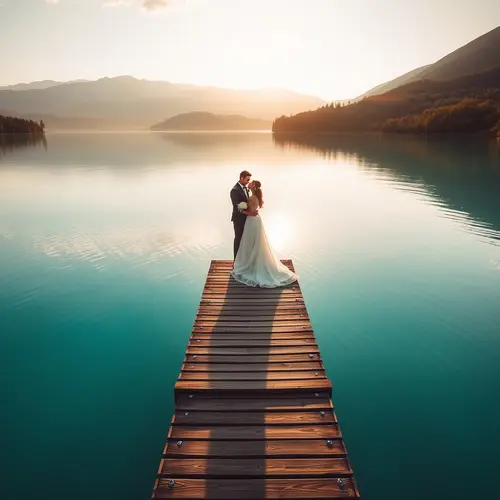
Consider a lakeside ceremony where the couple exchanges vows on a dock extending into calm water. The operator positions the drone low and perpendicular to the dock, capturing the scene with the waterline bisecting the frame. The resulting footage shows the ceremony above with a perfect mirror image below, creating an almost surreal sense of balance and symmetry.
This approach requires precise timing. Even slight ripples from wind or boat traffic destroy the reflection effect. Experienced pilots monitor water conditions throughout the day, identifying optimal windows for these specialty shots.
Integrating Aerial Footage into Your Wedding Film
Raw drone water footage represents just one component of your final wedding video. Professional editors blend these aerial perspectives with ground-level shots, creating narrative flow that showcases your day from multiple angles.
The most effective wedding films use aerial shots sparingly, treating them as establishing moments or emotional punctuation rather than constant perspective. This restraint prevents viewer fatigue while maintaining the special quality that makes these shots valuable.
Color grading for water scenes requires specialized knowledge. The blue tones of water can create color casts that affect skin tones and other elements. Skilled editors correct these issues while maintaining the natural beauty of your waterfront setting.
Budget Considerations and Package Options
Pricing for drone cinematography varies significantly based on equipment quality, pilot experience, and shooting duration. Most professionals offer tiered packages allowing couples to select coverage levels matching their budget priorities.
Basic packages typically include 30-60 minutes of flight time, sufficient for key ceremony and reception moments. Premium options extend coverage throughout the day, capturing preparation, guest arrival, and departure sequences from aerial perspectives.
According to industry surveys from WeddingWire, couples investing in drone water cinematography typically allocate 15-25% of their total photography budget to aerial coverage. This percentage reflects both equipment costs and the specialized expertise required for safe, effective operation near water.
Selecting the Right Videography Partner
Your choice of aerial videographer directly impacts the quality and safety of your wedding day filming. Request portfolio samples specifically showing water-based work, as this environment demands different skills than standard aerial photography.
Ask about backup equipment. Professional operators always travel with redundant systems, ensuring technical failures do not compromise your coverage. This redundancy becomes especially critical for destination weddings where equipment replacement proves difficult.
Verify the operator’s experience with your specific venue type. A pilot skilled in beach environments may lack expertise for lake or fountain scenarios. Each water type presents unique challenges requiring adapted techniques.
The investment in drone water cinematography preserves perspectives of your wedding day that guests never witness firsthand. These aerial views transform personal memories into cinematic narratives, showcasing the full scope and beauty of your waterfront celebration. By understanding the technical requirements, legal considerations, and creative possibilities, you ensure this specialized coverage delivers lasting value worthy of your investment.
More Stories
Ultimate Guide to Drone Events Planning
Pure Enchantment: Romantic Wedding Dresses That Capture the Heart Instantly
Pinterest Perfect: Trending Wedding Themes and Décor