
Table of Contents
Understanding Drone Track Technology in Wedding Cinematography
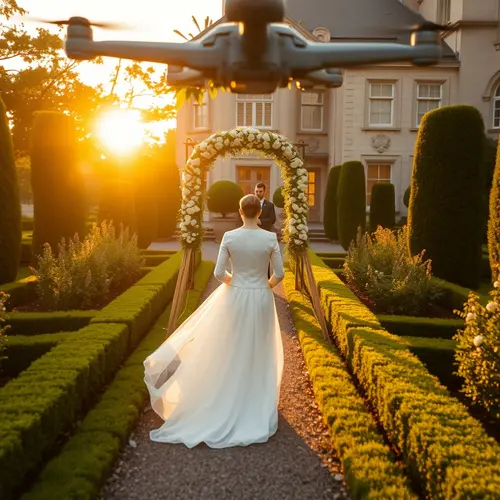
Modern tracking systems use GPS waypoints, visual recognition algorithms, or active tracking beacons to follow subjects. For weddings, this means capturing the couple’s grand entrance, processional walks, or outdoor portraits without manual piloting distractions. The core mechanisms include Active Track (subject recognition), waypoint navigation (pre-programmed paths), and orbit mode (circular tracking). Each serves distinct purposes in wedding coverage.Types of Drone Track Modes for Weddings
Subject tracking locks onto the bride’s dress, groom’s tuxedo, or wedding party formation using visual identification. This mode excels during processionals when subjects move at predictable speeds along defined paths. Waypoint tracking involves pre-programming the drone’s flight path before the ceremony. Videographers scout the venue, mark GPS coordinates, and create repeatable shots. This proves invaluable for multi-camera setups where timing matters. Orbit mode creates circular tracking shots around stationary subjects. Picture the couple’s first dance songs captured from a slowly revolving aerial perspective, maintaining constant distance while circling 360 degrees.| Tracking Mode | Best Wedding Application | Skill Level Required | Weather Sensitivity |
|---|---|---|---|
| ActiveTrack | Processionals, departures | Intermediate | Moderate |
| Waypoint Navigation | Venue reveals, establishing shots | Advanced | Low |
| Orbit Mode | First dance, couple portraits | Beginner | High |
| Manual Tracking | Unpredictable moments, receptions | Expert | Moderate |
Seven Essential Drone Track Techniques Wedding Pros Use
Professional wedding cinematographers rely on specific tracking techniques that separate amateur footage from broadcast-quality work. These methods require technical knowledge and practical experience.The Processional Pull-Back
This technique starts with the drone hovering at head height as the bride begins her walk. The flight path reverses slowly, maintaining framing while revealing the ceremony space and gathered guests. Speed calibration matters—too fast creates disorientation, too slow loses dramatic impact. Set the tracking speed to match the bride’s walking pace, typically 0.5 to 1.0 meters per second. Pre-program altitude increases of 2-3 meters during the reverse to showcase venue architecture.The Orbital Portrait Sequence
For couple portraits, program a 15-meter radius orbit at 3-5 meters altitude. The tracking mode circles while maintaining gimbal focus on the subjects, capturing golden hour lighting from multiple angles in one continuous take. This eliminates repositioning time and preserves the couple’s spontaneous expressions. Professional editors extract 8-12 unique angles from a single 60-second orbit.The Parallax Reveal
This advanced follow mode combines lateral movement with subject tracking. As the couple walks through gardens or along pathways, the drone flies parallel at offset angles, creating foreground-background separation through motion parallax. The technique requires manual piloting skills but produces cinematic depth impossible with static shots. Maintain 15-20 meter lateral distance for optimal parallax effect.The Departure Chase
Following the getaway car requires dynamic tracking adjustments. Start with the drone positioned ahead of the vehicle, then initiate reverse tracking as the car approaches. Transition to forward chase once the vehicle passes, maintaining 10-15 meter trailing distance. According to the National Association of Wedding Professionals, this shot ranks among the top three most requested drone sequences. The automated path must anticipate speed changes and turns, requiring experienced pilots who can predict vehicle behavior.Waypoint Ceremony Documentation
Create three pre-programmed waypoint paths: venue approach, overhead ceremony coverage, and reception space reveal. These repeatable flight path sequences ensure consistent quality across multiple weddings at the same venue. Store waypoint data in your flight planning app. This efficiency allows quick setup, crucial when working tight ceremony schedules.The Dual-Subject Track
Tracking both bride and groom during first look moments requires split-subject tracking. Position the drone equidistant between subjects as they approach each other, maintaining center framing as separation distance decreases. This tracking mode technique demands precise speed calibration since subject approach speeds vary. Build in altitude adjustments to prevent collision risks with venue structures.Reception Energy Capture
Outdoor receptions benefit from overhead tracking that follows energy flow. The drone descends from 20 meters to 5 meters while tracking dance floor activity, bouquet tosses, or sparkler exits. Dynamic altitude changes within the follow mode add dimensional interest to footage that would otherwise appear flat from fixed overhead positions.Common Flight-Path Mistakes Wedding Videographers Make
Even experienced operators fall into predictable traps that compromise tracking shot quality. Recognizing these errors saves expensive reshoots and disappointed clients.Ignoring Wind Compensation
Wind disrupts tracking stability, particularly during orbit modes. Drones fighting wind resistance create jerky footage despite gimbal stabilization. Always increase orbit radius by 20-30% in moderate wind conditions. The automated path path automatically adjusts, but many operators forget to modify speed settings accordingly. Reduce tracking speed by 15-20% when operating in winds exceeding 15 mph.Overusing Automated Tracking
Relying exclusively on automated modes produces predictable, sterile footage. Balance automated drone track shots with manual creative movements. Automated tracking serves as the foundation, not the entirety, of aerial wedding coverage. Industry veterans recommend a 60/40 split—60% automated tracking for consistency, 40% manual artistry for unique perspectives.Poor Tracking Subject Selection
Visual tracking algorithms struggle with white wedding dresses against white tents or black tuxedos in evening shadows. Choose tracking subjects with contrast against their environment. When dealing with challenging contrast situations, switch to waypoint or manual tracking rather than fighting unreliable subject recognition. A failed drone track during the ceremony cannot be repeated.Expert Opinion: The Evolution Beyond Simple Tracking
After shooting over 300 weddings with drone technology, I’ve observed a critical shift in how tracking gets utilized. The biggest mistake new operators make is treating drone track as a “set and forget” feature. Superior wedding cinematography combines tracking modes mid-flight. Start a shot with waypoint navigation to establish the venue, transition to subject tracking as the couple enters the frame, then finish with manual control for a creative flourish. These hybrid sequences separate professional work from basic coverage. Here’s a contrarian insight that challenges common practice: automated tracking often works better when you deliberately break the rules. Standard orbit tracking maintains constant altitude and radius, producing geometrically perfect but emotionally flat shots. Intentionally varying altitude and radius during orbits—while maintaining subject lock—creates organic, human-feeling movement that resonates deeper with audiences.Technical Considerations for Reliable Wedding Tracking
Signal interference at wedding venues poses significant challenges. Historic buildings with thick stone walls, outdoor locations with electromagnetic interference, and dense foliage all degrade GPS accuracy. Pre-flight testing of drone track reliability prevents ceremony disruptions. Arrive 45 minutes early to test all planned tracking modes in actual venue conditions. This practice, recommended by the Aerial Photography Insurance Association, reduces liability and ensures backup plans exist.Battery Management for Extended Tracking Shots
Tracking shots consume 20-30% more battery than static hovering due to constant motor adjustments. Calculate flight times conservatively—if standard flight time is 25 minutes, plan tracking sequences for 17-18 minute maximum durations. Always maintain two backup batteries at 60% charge specifically for tracking shots. The drone track sequence cannot pause mid-ceremony for battery swaps.Actionable Checklist for Wedding Drone Tracking Success
- Scout the venue 48 hours before the wedding to identify tracking corridors, obstacles, and no-fly zones
- Program three backup waypoint paths in case weather or venue changes require alternate shots
- Test subject tracking reliability with actual wedding party members during rehearsal if possible
- Calibrate tracking speed to match subject movement—processionals require 0.5-1.0 m/s, departures need 3-5 m/s
- Set maximum altitude limits in your flight controller to prevent accidental airspace violations during automated tracking
- Establish hand signals with ground crew for tracking adjustments since radio communication often fails in noisy reception environments
- Record tracking telemetry data for post-flight analysis and continuous technique improvement
- Maintain visual line of sight even during automated tracking modes—regulations require this, and it prevents disasters
Legal and Safety Protocols for Wedding Drone Operations
Federal Aviation Administration regulations require Part 107 certification for commercial wedding drone operations. Beyond basic certification, tracking shots introduce specific safety considerations. The drone track path must maintain minimum distances from all non-participating individuals. Even with couple consent, guests not involved in filming require 25-foot lateral clearance during tracking sequences. Liability insurance specifically covering automated drone operations protects videographers from tracking malfunctions. Standard policies may exclude coverage for autonomous flight modes, leaving operators personally liable for accidents.Post-Production Enhancement of Tracked Footage
Raw tracking footage requires color grading and stabilization to achieve cinematic quality. Even with gimbal stabilization, micro-vibrations during drone track sequences benefit from warp stabilizer processing. Professional editors apply speed ramping to tracking shots—slowing footage by 40-60% during key emotional moments while maintaining normal speed for transitions. This technique amplifies the dramatic impact of tracking sequences without requiring in-flight speed changes that risk losing subject lock. The drone track footage becomes the emotional anchor of wedding films when properly integrated with ground-based coverage. Establishing shots from tracking sequences provide context, while tighter ground angles deliver intimate moments. The marriage of these perspectives creates complete visual storytelling.Master the legal side too: drone track flights over crowds need permits and a visual observer in most countries. Pair automated paths with drone cell technology links for long-range stability and scout water venues via drone water shots playbooks. Rules at FAA UAS govern every commercial wedding flight.

Pick drone track paths that follow the couple’s real movement rather than a generic loop, and rehearse the drone track at the same time of day as the ceremony. A clean drone track shot keeps the subject centered through the turn, which is exactly what makes the final film feel cinematic.
What is drone track mode in simple terms?
It is an automated flight path that moves the drone smoothly around subjects. Pilots set waypoints and the aircraft follows them steadily.
When should pilots fly manually instead?
Fly manually in tight venues, strong wind or near obstacles. Manual control reacts faster than any preset route.
What permits cover automated wedding flights?
Most countries require a commercial license plus venue permission. Confirm insurance and no-fly times before the event.

I'm Arjun, a Bali-based wedding organizer with over 5 years of experience in beach parties, live music, bridal makeup and catering. I share practical destination-wedding guides from real events. I have published 2,425 wedding guides here since 2022.
More Stories
Drone Band: Ultimate Wedding Entertainment Guide
Destination Wedding Venues Guide for Couples
Drone Wedding Cost and Hiring Guide